
Pickup guides
How to Plan a Basement Cleanout in a Boston House
The best way out of a basement may be the bulkhead, even if everyone usually uses the interior stairs. Walk both routes empty-handed before you stack anything at the foot of a staircase.
Which exit will the crew use?
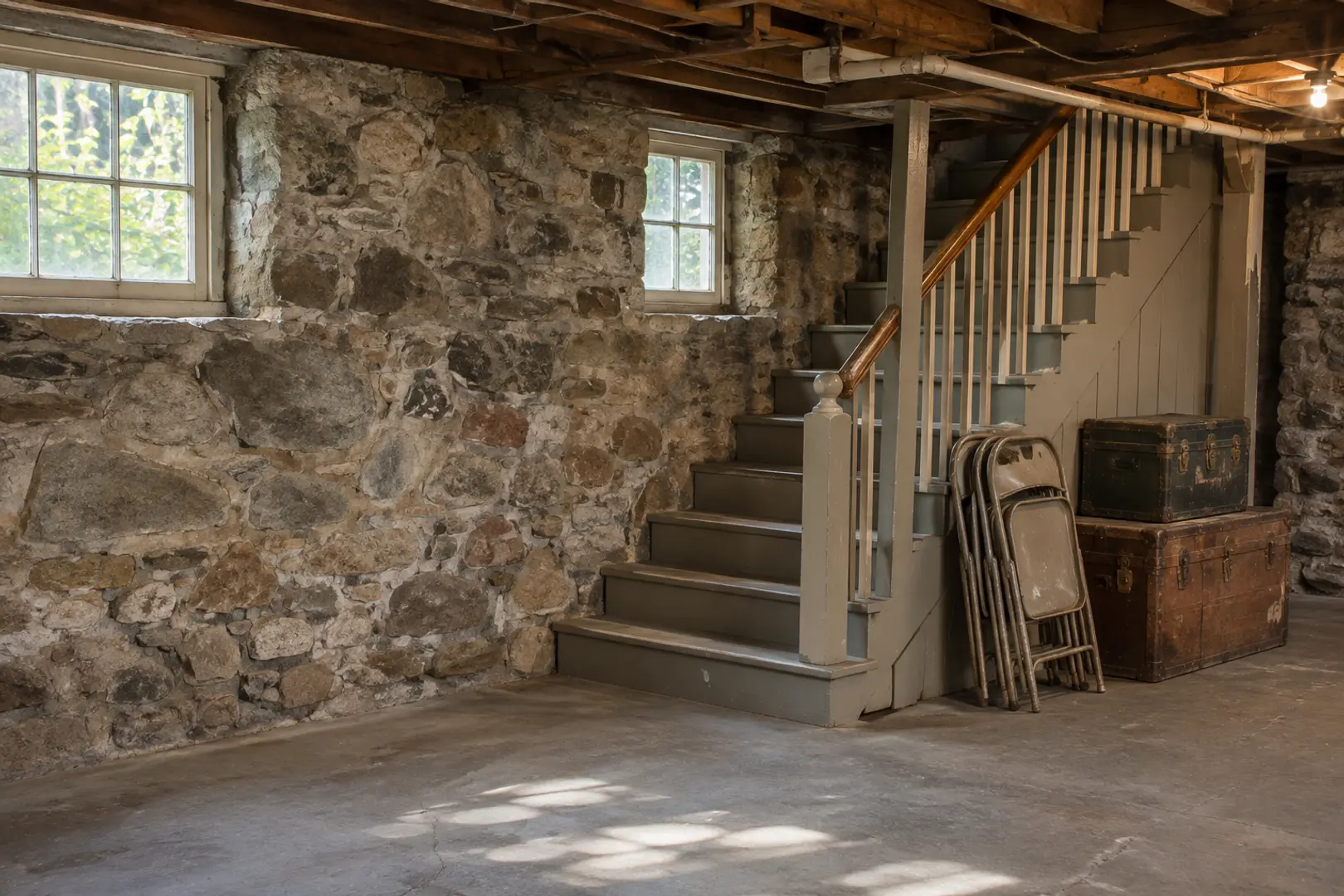
From the largest piece, trace a route to the truck. For an interior staircase, look at the turn at the bottom and clearance above the top tread. For a bulkhead, note the opening, the steps outside it, the gate and the slope across the yard. Tell the crew if a route crosses a neighbor’s property or passes under a low pipe.
A photo taken looking up the stairs shows overhead constraints. A second one taken from the landing shows the turn. Include the dimensions of a workbench, freezer or other item that might control the entire carry.
What changes the price of a cellar cleanout?
A workshop bench can look like one item from the stairs. Downstairs, it may turn out to be a loose top on two cabinets, or a permanent fixture built around a pipe. Only count the parts that are free to move. Point out any wall fasteners, connections or fixed parts before a crew prices it.
Two identical stacks of cartons can also mean quite different work. Record the ones holding books or hardware and whether any have been weakened by damp. If the cellar and a ground-floor room both need clearing, give them separate lines in the same request so the estimate covers both carries.
Sort the contents where they sit
Books, tools and records make surprisingly heavy boxes. Describe what is inside instead of labeling every carton miscellaneous. Put keepsakes in a dry, identified area. For wet cartons, mention the failed bottoms and whether the floor is currently dry. An active leak, standing water or a suspect insulated pipe needs attention from the building or an appropriate professional before arranging a routine carry.
A photo of the entire basement helps the crew plan space. A photo of the exit helps it plan labor. Include both when you ask about a residential basement cleanout. Flag a freezer or washing machine separately so appliance handling can be confirmed before the visit.
When clearing one bay is enough
Mark the space you want to reach when the visit is over. If it’s the washer, a clear path to its front matters more than emptying a shelf on the far wall. If it’s a contractor’s access panel, ask where they need standing room. Walk that route again before releasing the crew.
Have a pickup in mind?
Tell us what’s going, where it sits and when you need the space.